
Why We Invented Mistu: Because Everyone Deserves an Easier Way to Shower
How a doctor’s simple idea became a shower designed around real people, real challenges and the freedom to do more for yourself.
Think about your morning shower. You turn on the water, reach for the shampoo, squeeze a little shower gel into your hand and get on with your day. It’s something most of us do without giving it a second thought. But imagine trying to do all of that with one arm, with hands that are painful or difficult to control, or while worrying that bending down to pick up a dropped bottle could cause you to lose your balance.
For millions of people living with mobility challenges, limb difference or conditions that affect movement, showering isn’t always the relaxing, everyday experience it should be. It can take planning, extra effort and sometimes the help of another person. And while that help is often given with love and care, there’s something deeply personal about being able to wash yourself, in your own time, without having to ask.
It’s something we don’t talk about enough. The frustration of a bottle slipping from your hand. The effort involved in opening a lid when your fingers are stiff. Or that uncomfortable feeling of having to call someone into the bathroom because you can’t quite manage something on your own.
These are the everyday challenges that inspired Mistu.
It Started With a Doctor Who Saw a Problem That Needed Solving
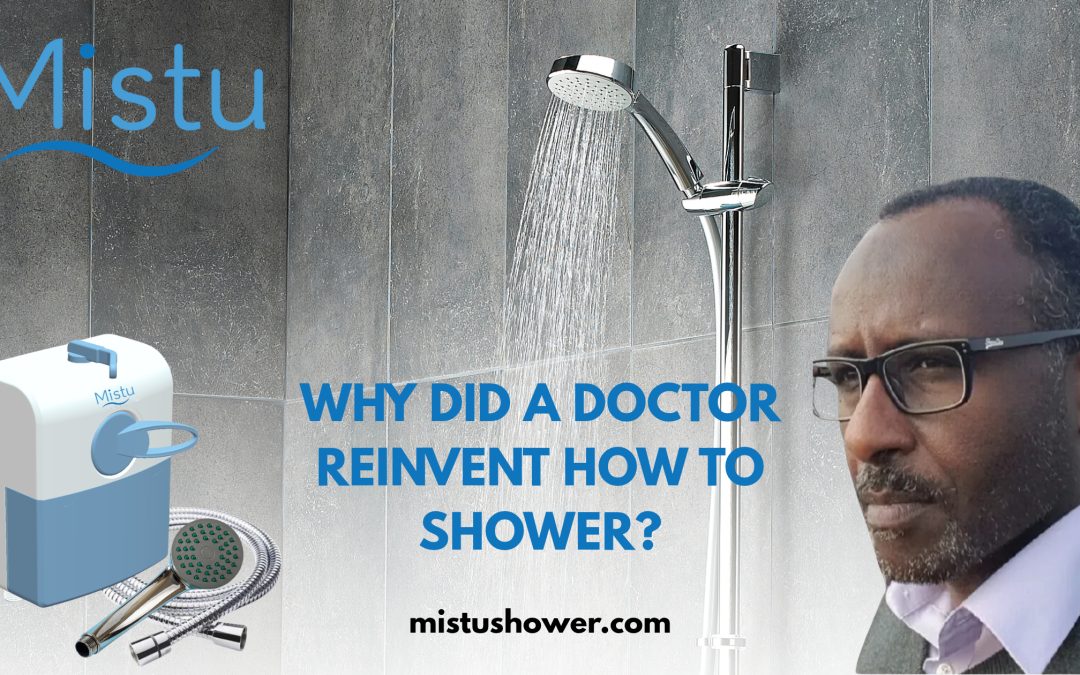
Mistu was invented by Dr Magid Suliman, a medical consultant working in one of Ireland’s busiest hospitals. Through his work, he saw first-hand how people with limited mobility, including those recovering from surgery, struggled with something as basic as showering independently.
He recognised that while bathrooms could be adapted with grab rails, shower seats and other equipment, one awkward part of the washing routine often remained unchanged: handling shampoo and shower gel bottles.
It sounds like such a small thing, doesn’t it? But when you think about everything involved in using a bottle, picking it up, opening it, squeezing it, putting it down and sometimes retrieving it when it falls, you begin to understand just how much we take for granted.
Dr Suliman believed there had to be a simpler way. He also saw opportunities to make showering more comfortable for people living with dry and sensitive skin conditions, by allowing chosen products to be introduced directly into the shower water.
After years of research and development, Mistu was born.
The idea was straightforward: what if the shower could deliver the washing product for you, instead of expecting you to manage bottles while you’re trying to wash?
That’s exactly what Mistu does. You fill the unit with your preferred shower gel or shampoo beforehand, and when you’re ready to wash, a simple control allows the product to infuse directly into the flowing water. Turn the control back and you’re rinsing with clean water again.
No bottle to hold while showering, no lid to wrestle with and no need to bend down to retrieve something that’s slipped from your hands.
It sounds simple because it is. And that’s the point.
Why the Controls Matter Just as Much as the Shower Itself
When we think about accessible bathrooms, we often picture large adaptations, special fittings or equipment that looks distinctly medical. But sometimes accessibility comes down to something much smaller, like how a control is positioned, how easy it is to operate and how many movements someone needs to make to complete a task.
The ergonomic thinking behind Mistu was about reducing unnecessary effort. Instead of asking someone to grip a slippery bottle, manipulate a small cap or squeeze out product with limited hand strength, Mistu brings the washing process into the shower system itself. Its straightforward controls allow the user to switch between infused water and clean water without repeatedly handling bottles.
For someone living with arthritis, reduced dexterity or a limb difference, that can make a meaningful difference. And for someone who needs to sit while showering, or who finds reaching and bending difficult, having fewer things to manage can make the whole experience feel less demanding.
Of course, everyone moves differently. Some people use one hand, some have limited movement in both arms, and others have developed their own ways of doing things that might surprise someone who hasn’t lived with those challenges. That’s why good accessible design should never assume there’s only one way to use something.
We wanted Mistu to fit into people’s lives, rather than expecting people to adapt themselves around another complicated product.
And the best way to understand why that matters is to hear from the people using it.
Eric’s Story: Finding Independence After Decades of Adapting
Eric Nelson is a bilateral above-elbow amputee who spent more than 30 years finding ways to make showering work for him. Like so many people with limb difference, Eric became incredibly resourceful. He adapted brushes, attached equipment to rods and even created his own washing arrangements because conventional shower products simply weren’t designed around his needs.
His wife also helped him wash areas he couldn’t easily reach himself. That support was important, but Eric wanted to be able to do more independently.
When Eric discovered Mistu, the difference was immediate. Instead of relying on bottles, homemade equipment or assistance with every part of washing, he could use the lever to introduce body wash directly into the water.
As Eric explained:
“Before, I relied on my wife to scrub my armpits. Now I just turn the lever and I’m independent.”
It’s a wonderfully straightforward comment, but there’s so much behind it. Eric wasn’t asking for anything extraordinary. He wanted to be able to have a shower without the same daily struggle he’d lived with for decades.
He described Mistu as revolutionary for his showering experience. What stands out most is not simply that the product made washing easier, but that it gave him more control over something deeply personal.
And that’s really what independence is about. Not necessarily doing everything without help, but being able to do more of the things that matter to you, in the way that works for you.
Patrick’s Story: When Bending Down Becomes a Real Concern
Patrick Hogan’s experience is different, but the challenge will feel familiar to anyone living with reduced balance or recovering from a stroke.
Patrick has the use of his left arm following a stroke, and his balance isn’t as steady as it once was. In a shower, that creates a very practical concern. Something as ordinary as bending down to pick up a bottle can increase his risk of slipping or tripping.
For Patrick, it’s not about convenience. It’s about avoiding movements that make him feel less secure.
Before Mistu, handling shower products meant managing those extra movements while trying to maintain his balance. With shower gel delivered through the water, he no longer needs to bend down to retrieve or handle a bottle during washing.
After using Mistu for a couple of months, Patrick told us:
“It has greatly improved my showering experience from a safety point of view and easability.”
What makes Patrick’s story so important is that it highlights how small changes to an everyday routine can help someone feel more confident. Mistu doesn’t replace other safety measures someone might need in their bathroom, but removing one unnecessary task can still make a real difference.
If you’ve ever worried about a parent or partner losing their balance in the shower, you’ll understand why that matters. It’s not just about making things easier for the person showering. It’s also about giving families a little more reassurance that their loved one has fewer awkward movements to manage.
Tracey’s Story: Independence Doesn’t Have to Look the Same for Everyone
One of the things we love about Tracey’s story is how clearly it shows that people find their own ways to manage everyday life.
Tracey lives with Parkinson’s disease and dystonia, conditions that can affect movement and make ordinary tasks more demanding, particularly on days when her mobility feels tighter.
She’s adapted her routine around what works for her. In fact, Tracey turns on her shower using her feet because that’s the easiest way for her to do it.
It’s a brilliant example of something people with mobility challenges know all too well. You learn to work with your body, finding practical solutions that help you stay independent.
But even with those adaptations, handling bottles, opening lids and making sure she could wash properly added effort to Tracey’s shower routine. Mistu helped remove those extra steps by delivering shower gel directly into the water.
For Tracey, the difference is about comfort, confidence and knowing she can manage more of her personal care in a way that suits her.
She describes what matters most beautifully:
“It’s all about independence, comfort and feeling good in your own skin.”
Her husband, Patrick, who has the use of one arm, was also able to fit Mistu himself. It’s another reminder that accessible design isn’t about assuming what people can or can’t do. It’s about giving them practical options.
Tracey’s story is particularly meaningful because conditions such as Parkinson’s can affect people differently from day to day. A task that feels manageable one morning can require much more effort the next. Having a shower routine with fewer things to grip, squeeze and reach for can make those more difficult days a little easier.
Making Life Easier for Families and Carers Too
When someone needs support with showering, it’s rarely just about the physical task of washing. There’s often a lot happening around it. Helping someone get comfortable, making sure they’re steady, reaching for products, assisting with washing and trying to give them as much privacy as possible.
For family members, it can be an emotional adjustment, particularly when a parent or partner who has always been independent begins to need help with personal care. For professional carers, it’s another part of an already physically demanding day.
We know that no single product can remove every challenge involved in assisted showering. Some people will always need hands-on support, and appropriate seating, grab rails or other bathroom adaptations remain important where they’re needed.
But what if we could make one part of that routine easier for everyone involved?
By removing the need to manage bottles during washing, Mistu can reduce some of the reaching, bending and repetitive handling involved in personal care. For carers, that means fewer tasks to manage. For the person showering, it can mean having more control over their own routine and potentially needing less assistance with washing products.
And sometimes, being able to say “I can manage this bit myself” means more than we realise.
A Modern Shower That Doesn’t Make You Feel Different
There’s another important part of Mistu’s design that we care about. We wanted it to look and feel like something that belongs in a modern bathroom, not like a piece of medical equipment.
People shouldn’t have to choose between having a bathroom that works for their needs and one that feels comfortable, attractive and familiar.
Whether someone is living with a disability, recovering from surgery, ageing or simply looking for a more convenient shower, the equipment they use should fit naturally into their home.
That’s why Mistu was designed as a practical addition to a shower, with simple controls and a discreet appearance. It’s not about drawing attention to someone’s limitations. It’s about quietly removing some of the things that make everyday life harder.
Because accessibility shouldn’t feel like a compromise.
It’s About More Than Shower Gel
When you listen to Eric, Patrick and Tracey, something becomes very clear. Their circumstances are different, their mobility challenges are different and the way they use Mistu is different. But they’re all talking about something much bigger than a shower product.
Eric talks about being able to wash without relying on his wife in the same way. Patrick talks about feeling more secure because he doesn’t need to bend down. Tracey talks about comfort, independence and feeling good in her own skin.
Those are the things that matter.
We invented Mistu because we believe everyday products should work for more people, including those whose needs are too often overlooked in traditional design.
And while Mistu won’t solve every difficulty someone faces in the bathroom, it can remove one that shouldn’t need to be there in the first place.
For someone with painful hands, that means no longer struggling to squeeze a bottle. For someone with a limb difference, it means one less task requiring grip or reach. For someone worried about their balance, it means fewer reasons to bend down. And for families and carers, it means one less thing to manage while supporting someone they care about.
Sometimes making life easier isn’t about doing something extraordinary. It’s about making an ordinary moment feel ordinary again.
That’s why Mistu exists.
And that’s why we’ll keep listening to the people who use it.
Because everyone deserves to feel comfortable, confident and as independent as possible in their own shower.
Mistu Shower. A simpler way to shower.